Vintage Sneaker Guide: Best Retro Kicks Worth Buying
 0
0
 0
0
I’ve spent close to fifteen years hunting warehouse deadstock, dusty consignment racks, and grandma’s closet finds that turned out to be worth more than her car. Vintage sneaker collecting has changed a lot since I started, but the core lesson hasn’t moved an inch: the best retro kicks are the ones with real design DNA, not just a famous name slapped on the box.
This guide covers the models actually worth your money, how to tell a genuine vintage pair from a reissue trying to pass as one, and where the smart buys are hiding right now. I’ll skip the hype-driven picks that flood every “best of” list and focus on shoes that earned their reputation the hard way.
What Makes a Sneaker “Vintage” Versus Just Old
A lot of sellers throw “vintage” on anything from the 2000s, and that’s misleading. In collector circles, vintage typically means a pair manufactured before 2000, with deadstock (unworn, original packaging) commanding the highest prices. Anything from the 2000s through the early 2010s falls into a “retro” or “OG-era reissue” category, which still has value but plays by different rules.
The material quality gap matters too. Older manufacturing runs, especially anything made in the US before production shifted overseas in the mid-90s, used different foam compounds, stitching methods, and leather sourcing. Collectors pay a premium for these because the construction has a heft and texture that modern factories rarely replicate.
The Models That Actually Hold Value
Not every classic silhouette appreciates the same way. Some get reissued so often that original pairs lose their scarcity premium, while others stay locked in demand because Nike, Adidas, or New Balance rarely touch the original colorways again.
Here’s a breakdown of the sneakers I consistently point people toward when they ask where to put their money.
| Model | Era | Why It Holds Value | Price Range (Deadstock) |
|---|---|---|---|
| Nike Air Jordan 1 “Chicago” (1985 OG) | 1985 | First colorway, cultural landmark, extremely limited surviving stock | $15,000 to $30,000+ |
| Nike Air Max 1 “Anniversary” runs | 1987 to 1990s | OG Air Max cushioning tech, low survival rate in good condition | $800 to $2,500 |
| Adidas Superstar “Shell Toe” (70s/80s) | 1970s to 1980s | Original rubber shell has a different flex pattern than modern remakes | $300 to $900 |
| New Balance 990 (Made in USA, v1) | 1982 | First $100 sneaker ever sold, US manufacturing quality | $400 to $1,200 |
| Nike Air Force 1 (1982 original) | 1982 | Original nubuck and leather blend, pre-2007 reissue wave | $600 to $2,000 |
| Reebok Pump Omni Zone | 1991 | Technical novelty, low production numbers | $300 to $800 |
Prices swing hard based on size (US 9 to 11 always commands more), condition, and whether the box and original tags survive. A pair without a box can lose 30 to 40 percent of its value instantly.
Spotting Fakes and Reproductions
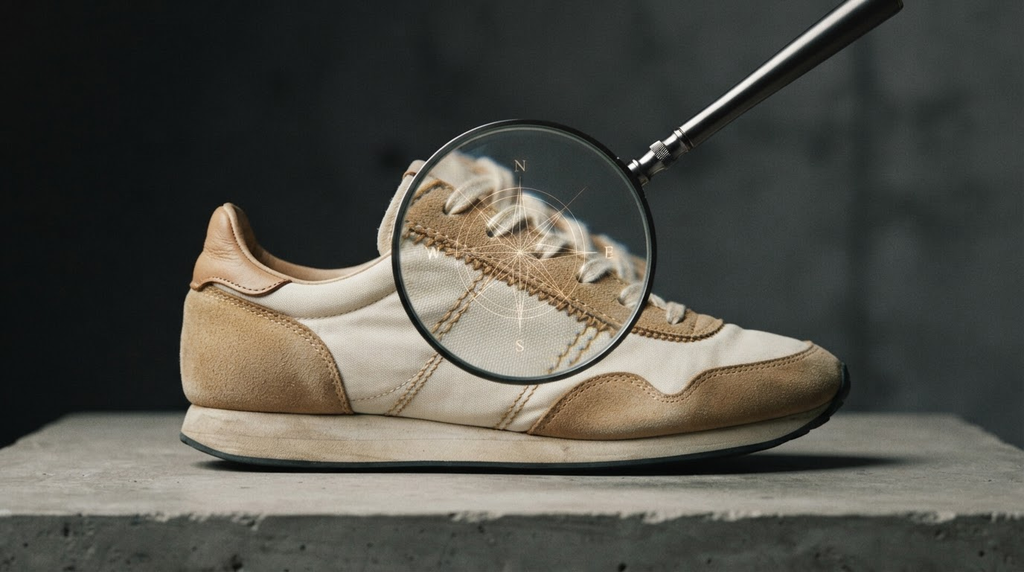
The vintage market has a fake problem, and it’s gotten more sophisticated every year. I’ve been fooled twice in my career, both times by sellers who knew exactly which details casual buyers skip checking.
Here’s my checklist before I hand over money on anything claiming to be OG vintage:
- Check the box date code. Nike boxes from the 80s and 90s use specific font styles and paper stock that counterfeiters rarely nail. Compare against verified archive photos.
- Smell the rubber. Original vintage rubber develops a specific oxidized smell over decades. Fresh reproduction rubber smells like a tire shop.
- Inspect the stitching pattern. Vintage stitching is often less uniform because it was done on older machines with less precision than today’s automated lines.
- Look at the foam. Original Air Max units yellow in a specific gradient pattern. Uniform yellowing across the whole unit is a red flag for reproduction foam.
- Verify the size tag font. Brands changed their size tag typography multiple times, and matching the correct era’s font to the correct decade catches most fakes instantly.
If a seller refuses to send close-up photos of the insole stamp or box label, walk away. Legitimate sellers in this space expect scrutiny and won’t get defensive about it.
Where to Actually Find Good Vintage Pairs
Everyone assumes the good stuff is locked up in resale apps, but I’ve found my best deals in places most collectors ignore.
Estate Sales and Storage Auctions
Sneakers from the 80s and 90s often sit forgotten in garages until someone passes away or a storage unit gets liquidated. I’ve bought three separate pairs of deadstock Jordan 1s this way for under $200 each because the sellers had no idea what they were sitting on.
Regional Consignment Shops
Big-city consignment shops know their inventory’s worth and price accordingly. Smaller regional shops in the Midwest and South frequently underprice vintage pairs because their customer base skews toward everyday wear, not collecting.
Military Base Thrift Stores
This one’s a niche tip, but base thrift stores rotate inventory fast and often carry donated gear from families who lived overseas in the 90s, where certain US models were exported in smaller batches. I’ve found Air Force 1 pairs here that never circulated widely stateside.
Caring for Vintage Pairs Once You Own Them
Buying the shoe is half the job. Keeping it in shape for another twenty years takes real attention.
Store pairs away from direct sunlight, since UV exposure accelerates both fabric fading and foam degradation. Keep them in a climate-controlled space rather than a garage or attic, where temperature swings speed up rubber hardening and adhesive breakdown. Stuff the toe box with acid-free paper instead of newspaper, since newsprint ink can transfer onto light-colored leather over time.
Avoid wearing deadstock pairs for actual walking if you care about resale value. Even a single wear drops a pair from deadstock to “worn once,” which can cut its price by half depending on the model.
Key Takeaways
Vintage sneaker collecting rewards patience and detail work far more than it rewards chasing whatever’s trending. Focus on models with genuine scarcity and cultural weight, verify every pair against known authentication markers, and look for inventory in places the resale crowd overlooks. Store what you buy properly, because a pair that survives in good shape for another decade is worth far more than one that degrades in a hot garage.
Start with one model you actually love wearing or displaying, learn its full history and authentication quirks inside and out, then expand from there. Specialists who know one silhouette cold consistently outperform generalists who spread themselves across ten models they barely understand.